The ascent through the snow, the peace and quiet, the feeling of freedom and awe. A refreshment at the summit, tea to warm up and then the descent through the deep snow. Splitboarding (or ski touring) is the type of snow sport that is closest to nature.
Whether you want to escape the queues at the lift, make snowboarding as climate-friendly as possible, enjoy the peace and quiet of the backcountry or simply get in an extra workout – there are countless good reasons to climb the mountain under your own steam and enjoy the deep snow. Curious now? We explain exactly what splitboarding is, what requirements you should meet and what equipment you need.

What is splitboarding?
While the first ski tourers were already out and about at the end of the 19th century, snowboarding only came into fashion much later. In order to experience the same pleasure on a board, the first snowboarders climbed the mountains in the backcountry on snowshoes. Their snowboard was attached to their rucksack. This not only meant that they weighed considerably more on the ascent. The snowshoes were also additional ballast on the descent.
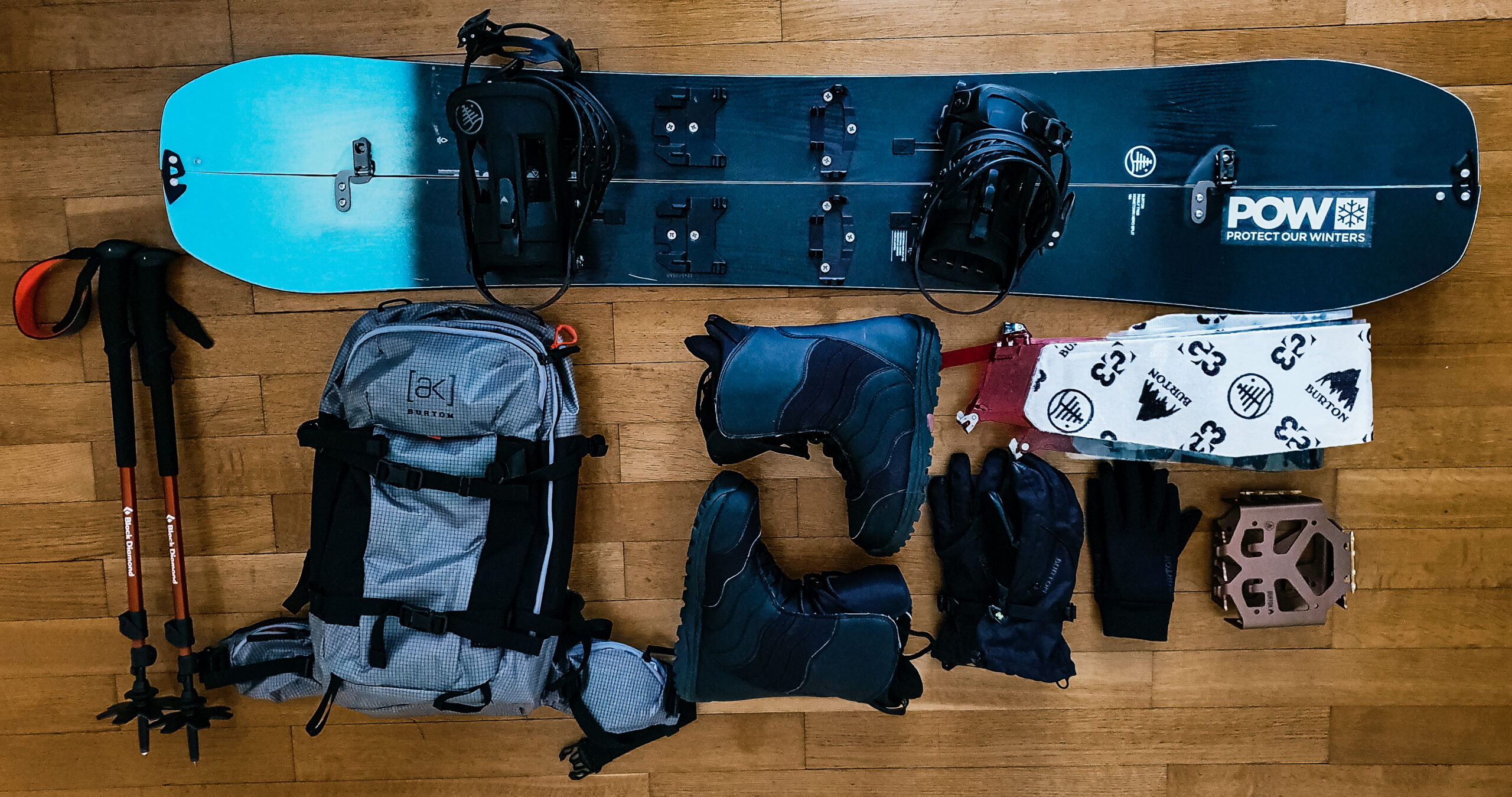
Splitboarding is like ski touring – but for snowboarders. Instead of taking the lift to the mountain in groomed areas and sharing the slopes with hundreds of others, you are usually in “wild” terrain. The mountain is climbed under your own steam. To do this, the splitboard is cut in half lengthwise. So you basically have a pair of skis with which you can climb the mountain. So-called “skins” are attached to the underside of your skis to provide the necessary grip. Now you can glide easily through the deep snow without sliding backwards.
Once at the top, the skins are removed and the two parts of the board are put back together. The binding is moved from the straight ski position to the snowboard position (duck stance). After a break with refreshments at the summit, you can now enjoy your turns in the powder.

Sounds cool, doesn’t it? Then let’s get going! It’s not quite that simple. Ski touring and splitboarding involve a number of risks that you should be aware of first. You are in unprepared terrain, so there is always a certain risk of avalanches. You should therefore always be accompanied by someone who knows the terrain and knows which areas are safe to ski in. This brings us to the next point – never go alone! At least in pairs, better in threes.
In addition to knowledge of the terrain, you should also have certain physical requirements. But more on this in the second part more.